
18.5 — The Governor and the Question
Based on John 18:28–40
The Pace of the Morning
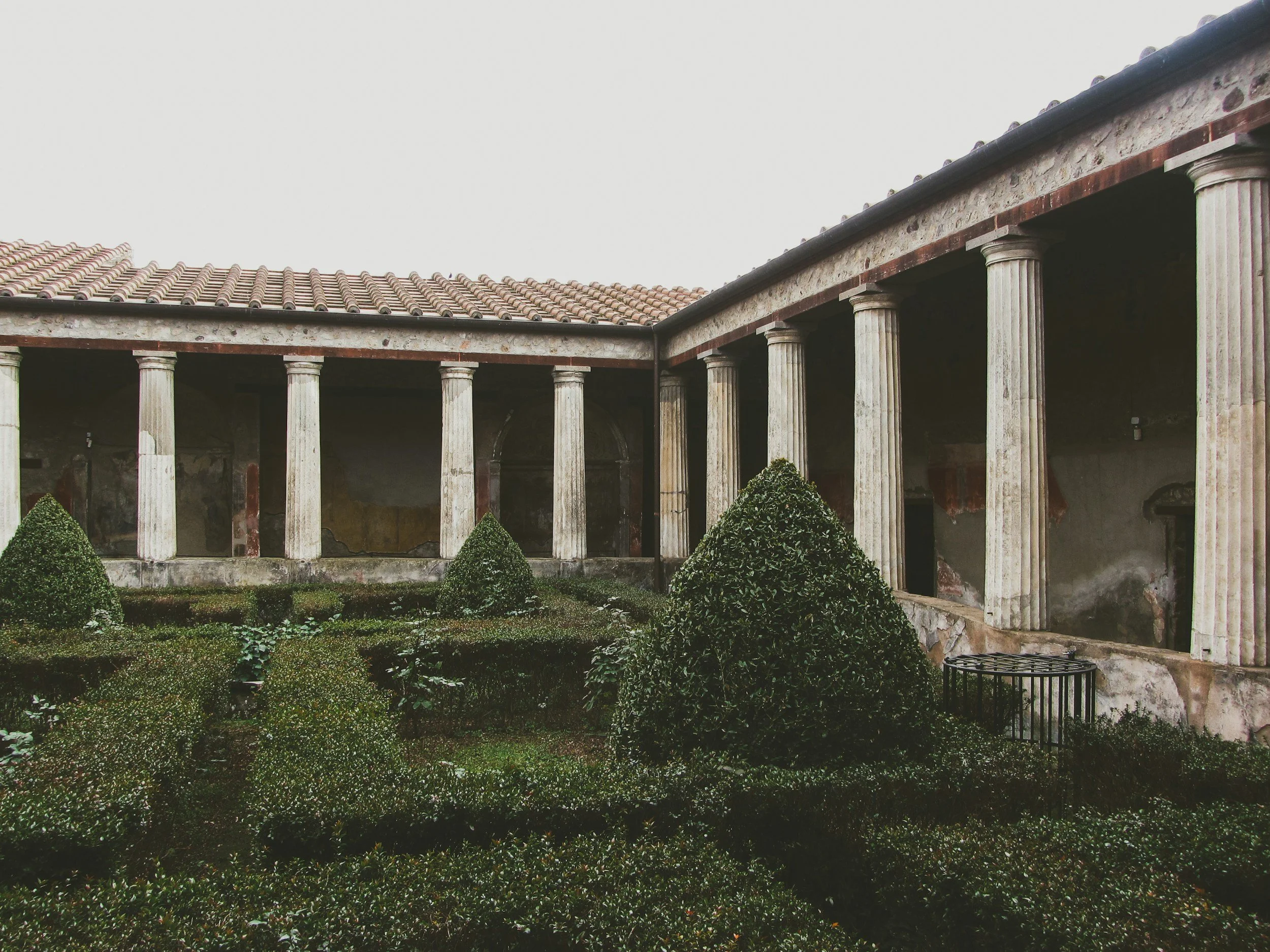
The morning everything accelerated
“Slow down,” I want to say again.
But the story will not slow down.
One moment, we are in the courtyard, still feeling the heat of the fire against Peter’s face. Next, we are moving through the narrow streets of Jerusalem at first light, the city just beginning to stir. Sandals on stone. Voices low, urgent. A bound man in the middle of it all.
And then suddenly, we are there.
The Praetorium.
A Roman space. Cold. Ordered. Official.
Not a place you wander into. A place you are brought.
Outside the Door
It is early. Too early for this kind of business.
The Jewish leaders stop short of the entrance. They will not go in. Not today. Not during Passover. Purity matters. Appearances matter.
So they wait outside.
And Rome adjusts.
Pilate comes out to them.
You can feel the strange tension of it. Roman authority stepping outward. Religious authority holding its ground. Neither side crossing fully into the other’s world.
Behind Pilate, you can almost see it.
Soldiers. Armed. Alert.
Not casually standing around, but watching. Always watching. Because this is Passover. And Passover is never just a holiday. It is memory. It is identity. It is the kind of story that can turn a crowd into something Rome fears.
They have seen it before.
Cities crushed. Thousands killed. Entire regions silenced when things tipped too far.
Everyone standing here knows that.
Which means this is not just a trial.
This is containment.
The Charge That Must Be Rewritten
“What accusation do you bring?” Pilate asks. (18:29)
It sounds simple. Procedural.
But it is not.
He is forcing them to translate their concern into his language.
Rome does not care about blasphemy.
Rome cares about threats.
About kings.
About rebellion.
And so the charge begins to shift.
Not “He challenges our theology.”
But “He claims authority.”
Not “He disrupts our system.”
But “He might disrupt yours.”
You can feel the negotiation underneath the words.
They need Rome.
Not just for death, but for a certain kind of death.
Crucifixion.
A message nailed to wood:
This is what happens to those who challenge Rome.
The Man on the Platform
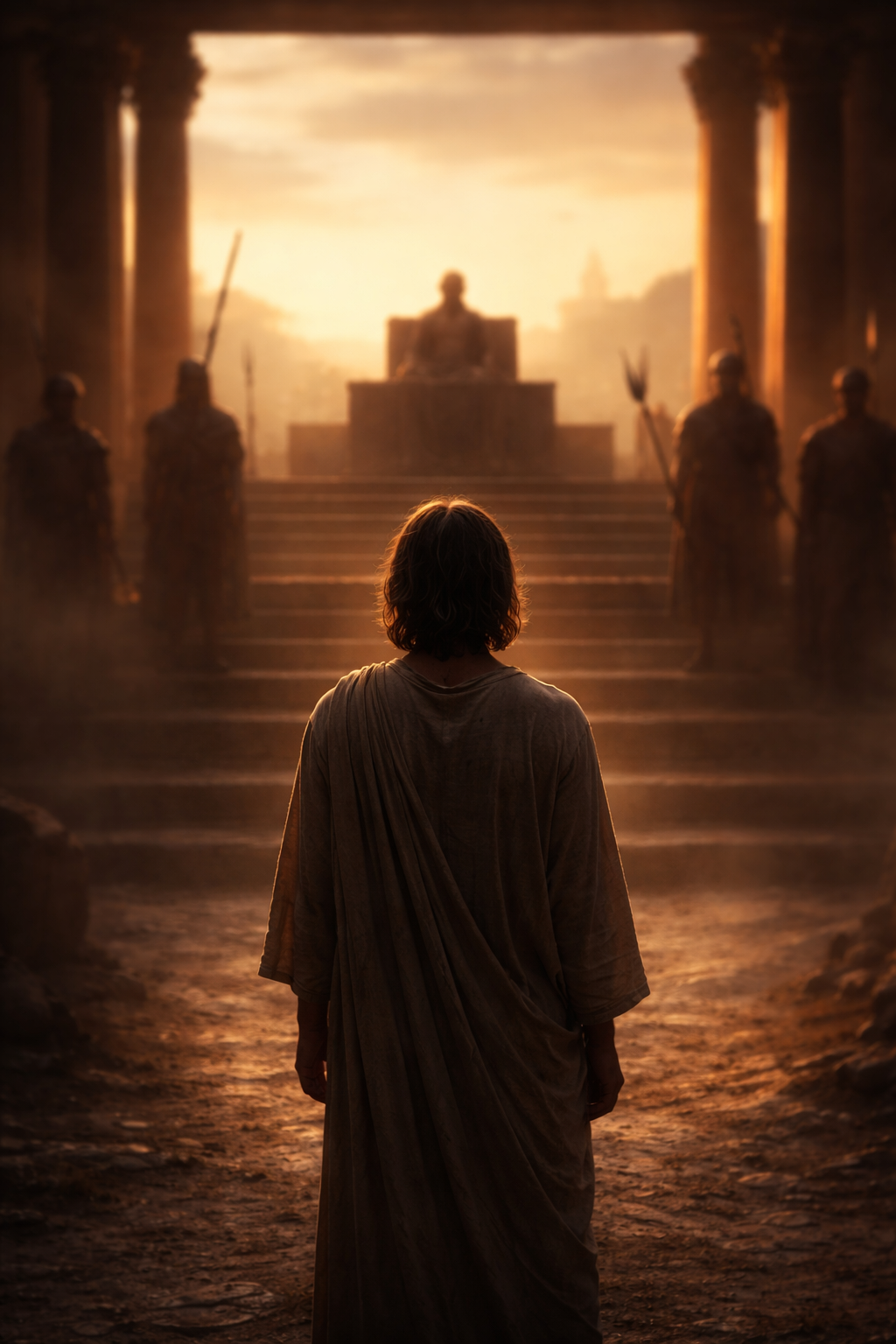
Calm in the center of pressure
Pilate takes in the scene.
This is not his first Passover.
He knows what this city can become.
Crowds swell. Voices rise. Movements form quickly here, especially when memory and hope begin to mix. He has seen what happens when things get out of hand, and more than once he has been forced to answer for it.
He has learned something over time. You can rule hard, but not carelessly. Not here. Not during a feast like this.
Another disturbance, another complaint, another report sent up the chain, and everything changes for him.
So when they wake him early and bring him this man, this is not just an inconvenience.
It is something to resolve.
Quickly.
Inside
Pilate turns and goes back inside.
And for a moment, everything changes.
The noise drops.
The crowd disappears.
The pressure shifts from public to private.
Now it is just the two of them.
And a few guards. Watching.
Always watching.
The Question That Decides Everything
“Are you the king of the Jews?” (18:33)
This is not curiosity.
This is a line in the sand.
Because in Rome’s world, that sentence has only one meaning:
Are you a threat?
Pilate is trying to place him.
Revolutionary?
Teacher?
Madman?
He is hoping for something dismissible.
Something that lets him resolve this and move on.
But Jesus does not answer the way he expects.
He answers with a question.
“Do you say this on your own, or did others tell you about me?” (18:34)
And just like that, the roles shift.
The one being judged begins to expose the judge.
Two Worlds Talking Past Each Other
Pilate pushes back.
“Am I a Jew?” (18:35)
You can almost hear the edge in it.
This is not my world.
This is your problem.
Your people brought you here.
Now tell me what I need to know.
And then Jesus speaks words that have echoed for centuries:
“My kingdom is not of this world.” (18:36)
It is easy to make those words abstract.
But standing here, they are anything but.
Pilate hears them in the only way he knows how.
No army.
No uprising.
No threat.
If this man were a king in the way Rome understands kings, there would be soldiers fighting right now.
There are none.
Which tells Pilate everything he needs to know.
Or what he decides is enough.
A Different Kind of Power
Still, he presses.
“So you are a king?” (18:37)
And Jesus answers, but not cleanly. Not in the way a Roman would prefer.
“You say that I am a king. For this purpose I was born… to bear witness to the truth.” (18:37)
And there it is.
The word that does not fit in this room.
Truth.
Not power.
Not control.
Not order.
Truth.
The kind that cannot be enforced.
The kind that can only be recognized.
“Everyone who is of the truth listens to my voice.” (18:37)
And the room goes quiet.
Because this is not how Rome works.
The Question Behind All Questions
Pilate looks at him.
Tired.
Measured.
Aware of what is waiting outside that door.
A crowd that could shift.
Leaders who are watching closely.
A situation that could turn.
“What is truth?” (18:38)
It does not sound like a search.
More like something said on the way to a decision already forming.
Truth does not calm crowds.
It does not steady a morning like this.
Something else does.
And he turns back toward it.
The Moment of Clarity
When Pilate walks back outside, he says:
“I find no guilt in him.” (18:38)
For a second, everything holds.
No threat.
No crime.
Release him.
You can almost feel it.
That small lift in the air.
The Turn
“Do you want me to release him?” Pilate asks. (18:39)
And now the moment shifts again.
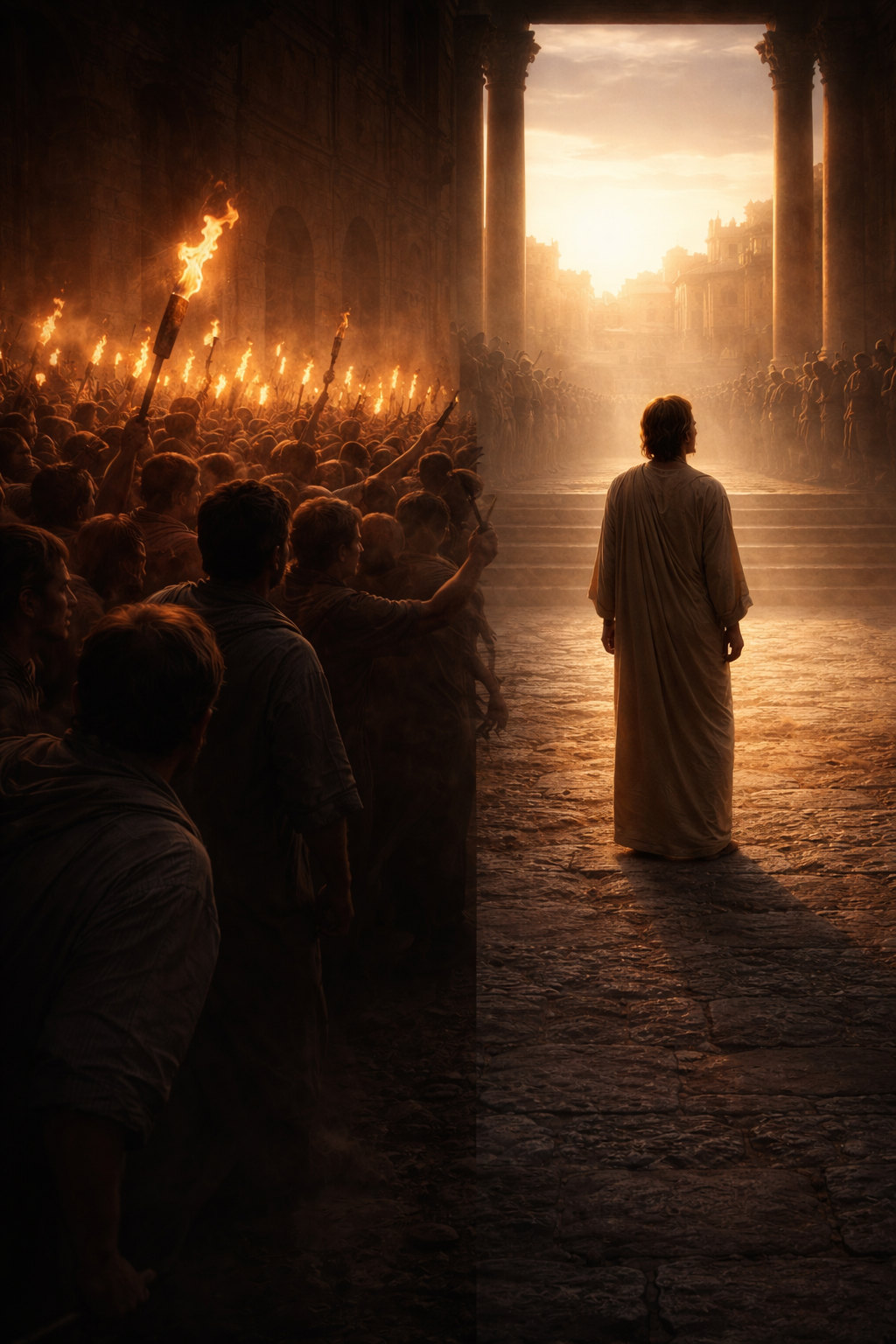
Back to the crowd.
Back to the leaders.
Back to the pressure that has been building all night.
“No,” they say.
“Not this man.”
“But Barabbas.” (18:40)
And just like that, it breaks.
The Question That Follows Me
John leaves just enough space here for something to rise.
I find myself wondering what would have happened if it had gone another way.
If Pilate had stopped it.
If the crowd had chosen differently.
If truth had been enough.
But the story does not follow that road.
It stays here.
And so do I.
The Unspoken Invitation
John does not explain this moment.
He lets it sit.
And I notice how quickly I want to move on from it. Wrap it up. Decide what it means.
But something in me lingers.
I watch how fast everything moved. How quickly decisions were made. How little space there was to slow anything down.
And I start to recognize something.
Not in them.
In me.
How often do I move like that?
How often do I rush right past something before I’ve really seen it?
How often do I let the moment carry me instead of staying with it?
I don’t try to answer that here.
I just stay with the questions a little longer than I usually would.
A Final Glance
The morning is brighter now.
The city is waking.
The decisions are already in motion.
And I am still standing there, watching him.
Calm.
Unhurried.
Clear.
While everything else moves.
I try to imagine what it would feel like to carry that kind of steadiness into an ordinary moment.
A small decision.
A passing conversation.
Something I might normally move through without noticing.
I stand there a little longer than I expected.
And then the scene begins to fade.
But not completely.
Something about it stays.
Key Takeaways
Pay attention to moments that feel rushed; they often carry weight.
Notice when decisions are shaped by pressure rather than clarity.
Stay with important questions longer than feels comfortable.
Recognize how easily truth can be overlooked, not opposed.
Look for steadiness, not speed, in meaningful decisions.
This is the glimpse I’ve been given, through John’s words and my own walk through loss and light.
