

What would it mean to stop merely looking back at Jesus and begin looking forward with him?
What changes when I stop reading with the answer key?
As I watched John walk slowly out of my imagination, I was left with a deep sense of loneliness, the kind you get the day after the funeral. I sat in silence each morning, looking and listening for a way to express my understanding of chapter 20. None came.
Chapter 20 reads like a conclusion—a pen down, book closed, “that’s that” conclusion.
Except it’s not.
John adds another chapter, a fishing story, and the end of chapter 20 gestures forward, inviting me into it. As the invitation becomes more distinct, I begin to walk cautiously, still wondering about this “life” he has just promised.
Then I suddenly notice that I’m trying to walk forward while looking backward.
Jesus’ life for me is history. For John, it was Tuesday...or Wednesday. Days with real-life consequences.
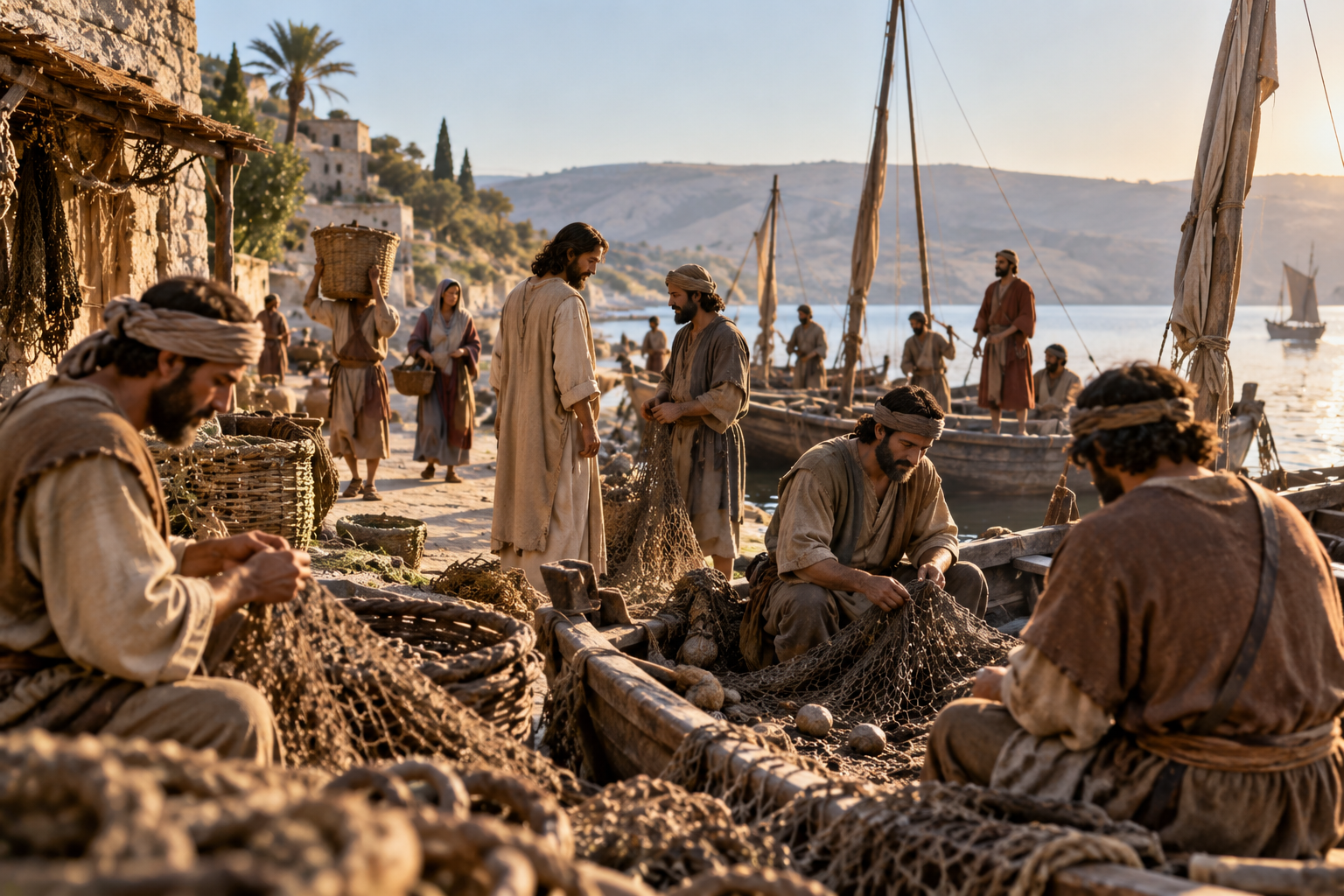
Before it became Bible history, it was everyday life.
Instead of simply looking back at Jesus, what would it mean to look forward with Jesus? Could John be asking me to do as he did—to stand inside his life and look forward?
Reading with the Answer Key
The thought unfolded slowly, like a line of dominoes falling one at a time. Walk with me through my thought process.
As a young boy in Sunday school, I first heard of this man Jesus when he was already the Christ. In fact, that was his name: Jesus Christ. I was taught to see him first as Christ and then as Jesus. I encountered the theological conclusion before I met the human being.
Not so for John and his friends.
They started with the man and then were invited to see him as the Christ.
I had to stop and consider that for a while.
Me looking back; John looking forward.
See the difference?
For me, he’s Christ at Cana. For John, he is Jesus. When the water suddenly tasted like fine wine, I thought, “Sure, no problem. Jesus is the Christ; he can do anything he wants.”
But when John took his first sip, what might he have thought?
When Jesus chose to be arrested and handed over, I thought, “Sure, he was the Christ; that was his role.”
But when John found out, what might he have thought?
Maybe it was something like, “Holy moly! What just happened? What manner of man is this?”
Alan is reading with the answer key.
John lived without one.
As I thought back over John’s story, I realized he had given me sign after sign so that I could learn to see what he learned to see: this unlikely carpenter was the Christ.
This man from Nazareth lived from a different center, one that looked like communion with the divine. It changed how he saw life. It changed how he acted toward people. And it changed how people responded to him.
Looking back, it’s Bible history.
In real time, that idea was raw and explosive.
What Kind of God?
And Jesus changed John’s idea of what God was like.
Imagine hearing Jesus tell the Samaritan woman there was no special place to worship, no holy mountain, no holy temple. There was only spirit and truth.
Sure, it makes sense now.
But then?
One day John hears Jesus tell Philip, “Whoever has seen me has seen the Father.” A few days earlier, Jesus had been on his knees washing their feet.
What must John have thought?
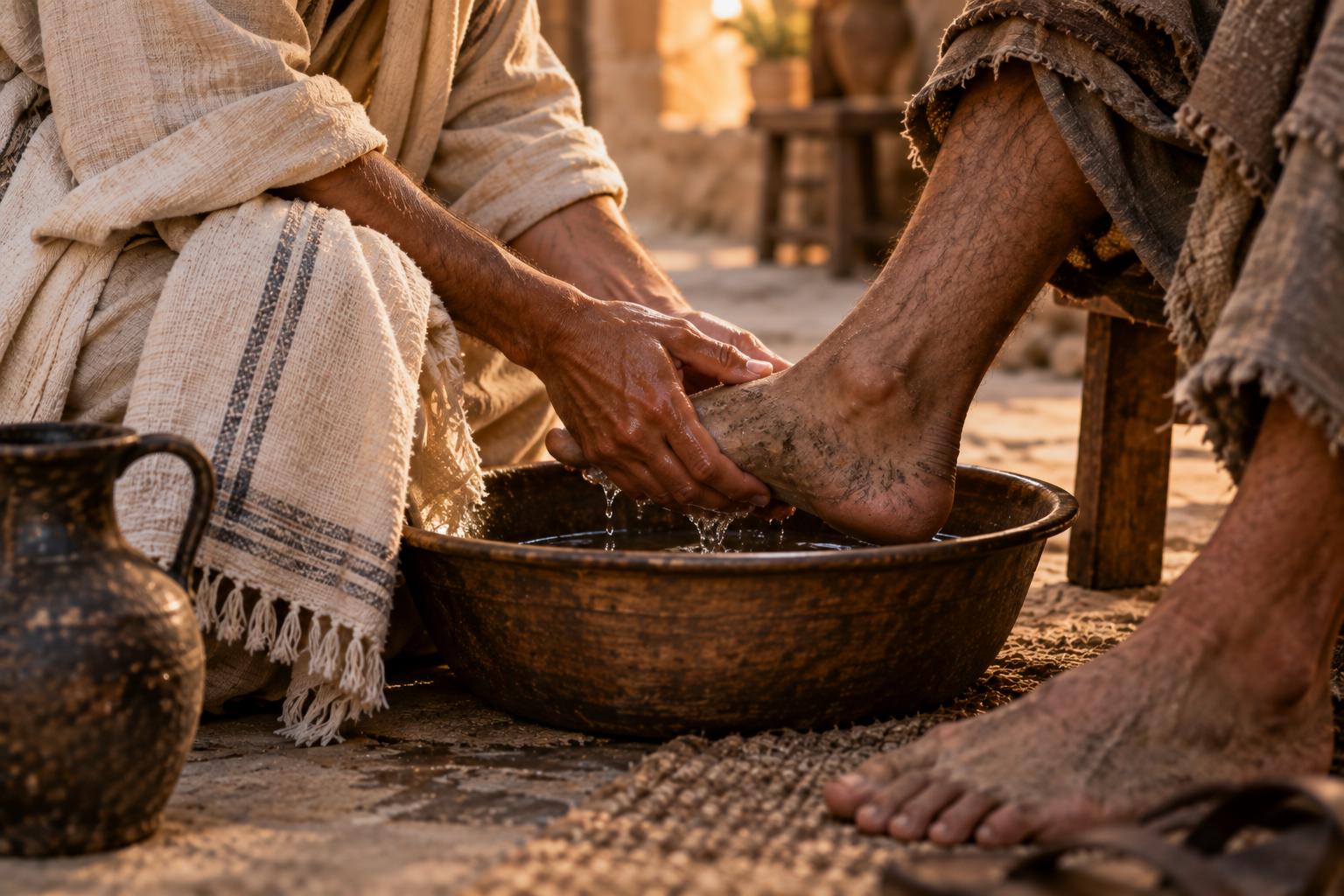
“Whoever has seen me has seen the Father.” What kind of God kneels with a towel?
Suddenly God looks like someone who washes feet, touches outsiders, speaks with women others avoid, feeds hungry people, refuses domination, forgives enemies, and makes breakfast.
He wants what is best for each person in front of him.
God comes near.
And perhaps, even more startling, Jesus seems to reveal a God who had always been near.
In real time, in John’s time, that idea changed everything.
My Father and Your Father
Sitting here and looking back through my preconceptions, I began to see how easy it was to trivialize Jesus’ life. I already knew about Easter when he was arrested.
John didn’t.
He had to move forward, day by day. His consciousness shifted, his understanding of God changed, and his view of himself was reframed.
Jesus had invited John into this same communion, but he had also invited all the others—even the doubters and deniers. He invited each of them to reorient life around this divine center.
And if this communion was not something John earned but something he learned to recognize and live from, perhaps belonging came before achievement. Perhaps worth wasn't bestowed by position, certainty, or religious performance. Perhaps it was already there.
“My Father and your Father.”
From the inside looking forward, that realization would change every day for the rest of John’s life.
Is that John’s invitation to me, I wondered?
To see Jesus as he saw him, from inside his life?
To see God as Jesus saw him—as one who would invite a carpenter and a fisherman and a tax collector into divine-human communion?
Is he inviting you and me to listen carefully for the same invitation: to recognize the potential for divine-human communion within us and learn to live each new day from that center?
For me, that begins with recognition. The presence is not something I manufacture. Communion is not something I earn. I simply become more aware of what is already there, learn to listen for it, and gradually allow it to inform the way I live.
Choices become actions. Actions become habits. Habits shape character.
And perhaps, over time, my unique life begins to express more of the character I have seen in Jesus—not because I am trying to earn God’s approval, but because I am learning to live in alignment with the relationship that is already there.
And Then Turn Around
Perhaps John is bidding me not merely to look back at Jesus’ life and say, “Wasn’t that amazing?”
Looking backward isn’t the problem.
Stopping there is.
I need to keep looking back at Jesus—to watch how he sees people, how he uses power, what he values, what he refuses to value, how he loves, forgives, confronts, serves, and responds to suffering. I need to look back long enough to learn his way of seeing.
And then turn around.
Look forward from within my own life and say, “This changes everything!”

I need to look back long enough to learn his way of seeing. And then turn around.
When Believing Becomes Be-Living
“Through believing you may have life in his name,” John said.
I think I understand where we are now—at the crossroads where believing becomes be-living.
Maybe this “life” is not primarily about escaping the one I have been given, but about learning to inhabit it differently. Communion becomes identity. Identity informs action. Action shapes character. And gradually a different kind of life begins to emerge—one marked by connection, belonging, meaning, humility, love, and perhaps even a little more peace and joy.
It doesn’t mean the rough places disappear.
But even they can become something different.
Grief can turn to tenderness.
Could this be where we join that circle of belonging Jesus prayed for in chapter 17, where he is one of us and we are one of his?
“I in them and Thou in me.”
John Takes Us Fishing
And just when all of this threatens to spiral upward into the theological stratosphere, John does something wonderfully practical.
He takes us fishing.
Back to ordinary people.
Back to work.
Back to hunger and disappointment.
Back to relationships.
Back to breakfast.
Back to life.
Maybe John knows how easily I can become so heavenly minded that I’m no earthly good.
Chapter 21 begins with seven disciples. Five are named.
Two are not.
I don’t know why John leaves them unnamed, and I don’t need to pretend that I do. But after twenty chapters of standing outside his story looking in, I know what I’m going to do with one of those empty seats.
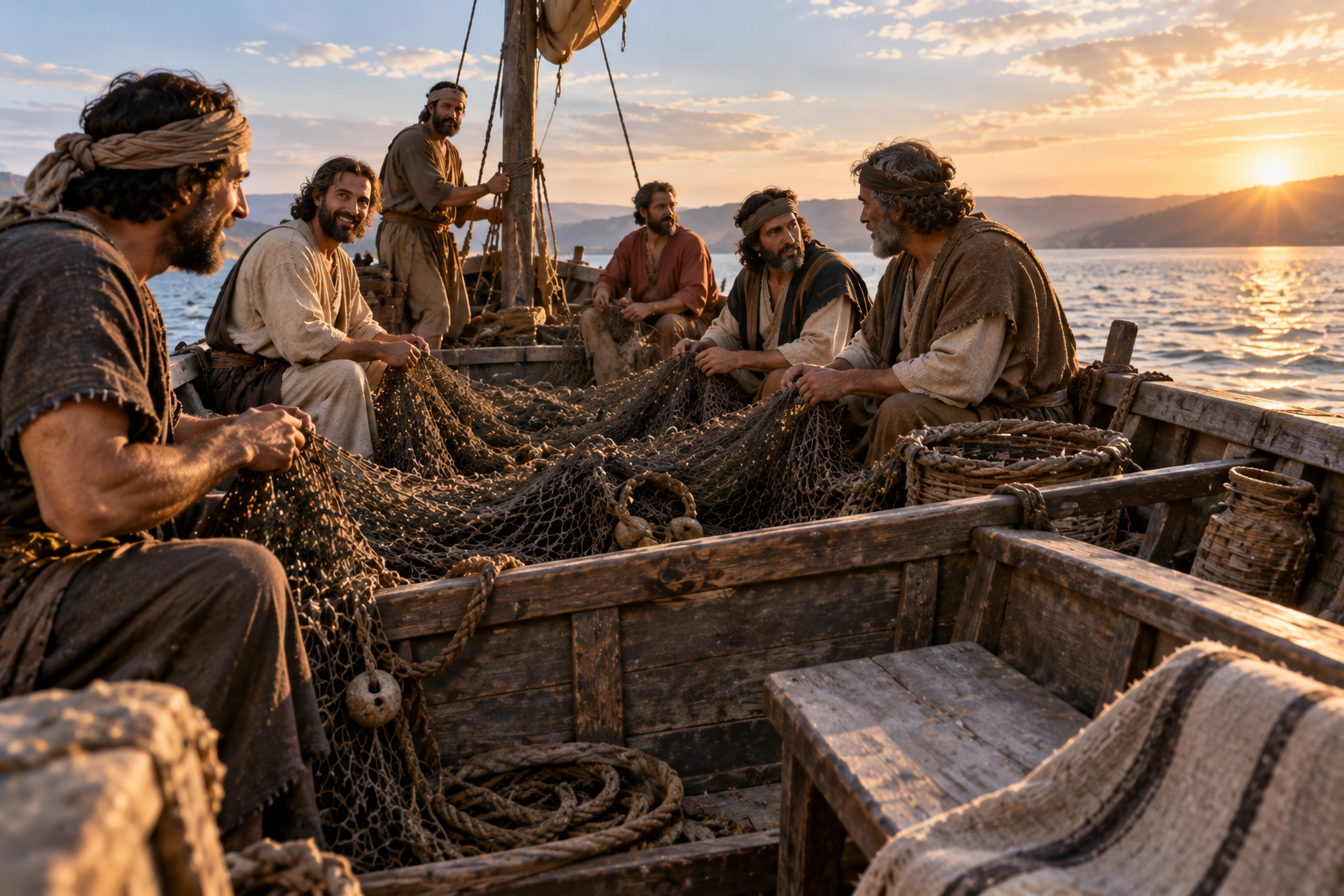
After twenty chapters of standing outside the story looking in, I'm getting in the boat.
After sitting with this for a few days, I’m ready to step into chapter 21, walk down to the shore, climb into the boat, and take my place among six other disciples.
It’s time to see what believing looks like when it becomes living.
