
John 21.1 - Back to Galilee
Where Resurrection Meets Ordinary Life
Scripture: John 21:1–6
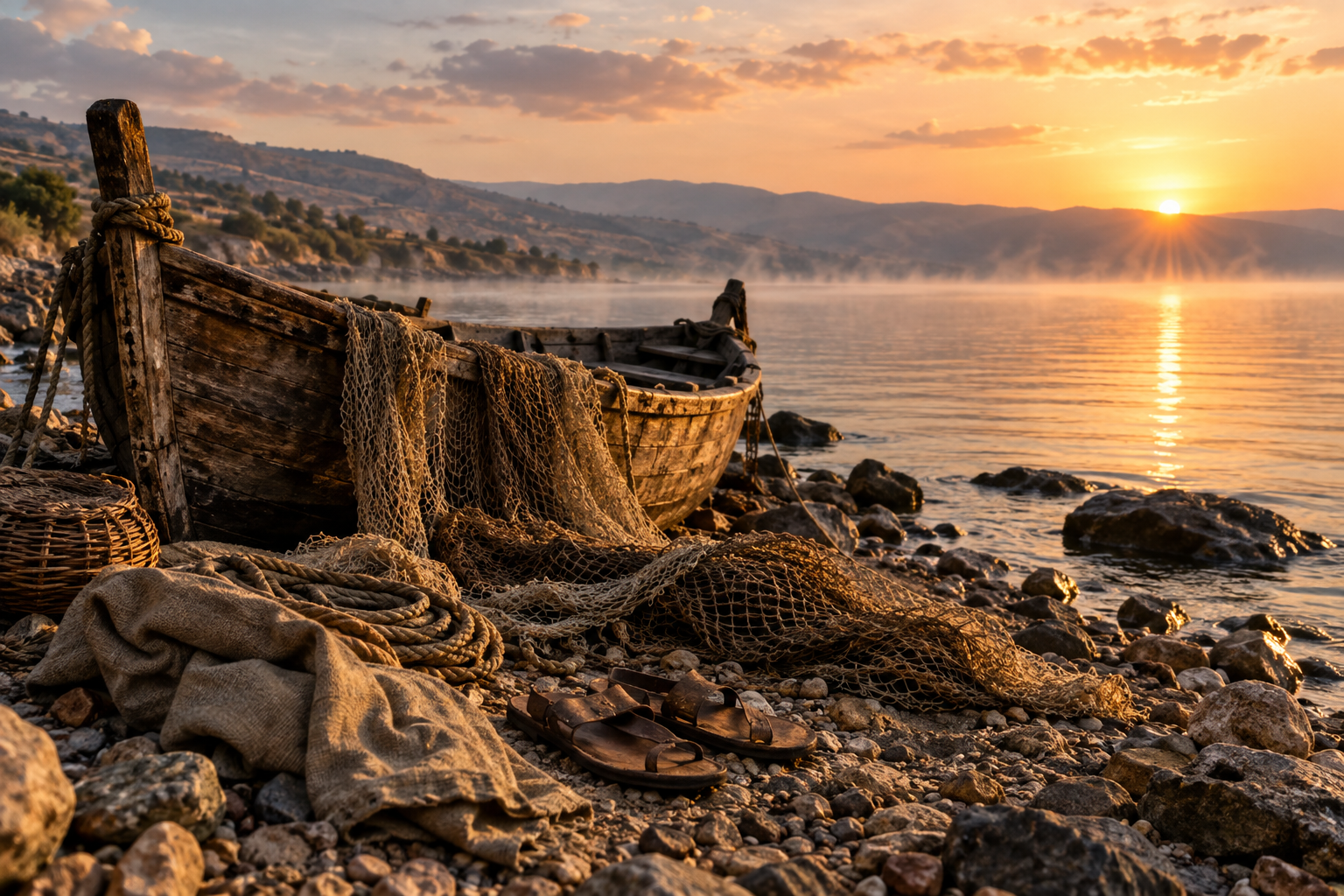
"Put out the fires and let's go home, boys. Thomas, look outside and make sure the coast is clear. John, do one last sweep inside and lock the door."
Peter was always Peter—the first to take charge when no one else knew what to do.
For more than two weeks we had been in Jerusalem, the holiest city in Israel. It seems like only yesterday we entered through its gates while crowds shouted and waved palm branches. We saw old friends, celebrated Passover, and laughed around a table with Jesus.
Then came the soldiers.
The arrest.
The cross.
And finally, the silence.
We were certain they would come for us next, so we locked ourselves behind closed doors and waited.
Then the impossible happened.
Jesus stood among us.
Most of us thought we were seeing a ghost. Thomas wasn't even there the first time. Jesus showed us his hands and his side. He breathed on us and said,
"As the Father has sent me, I also send you."
Send us?
Where?
To whom?
How?
Surely he would explain. Surely he would gather us again, lay out a strategy, and tell us exactly what came next.
But nothing happened.
We waited.
Eventually waiting became walking.
The Long Walk Home
The road from Jerusalem back to Galilee took several days. Step by step we left behind the stone streets, the Temple, the crowds, and the memories. As the hills opened before us, the familiar smell of the lake reached us before the water came into view.
Home.
The Sea of Galilee was where many of us had grown up. It was where we learned our trade, built friendships, raised families, worried about taxes, repaired nets, and hoped for a good catch. Long before we ever heard Jesus say, "Follow me," this lake had shaped our lives.
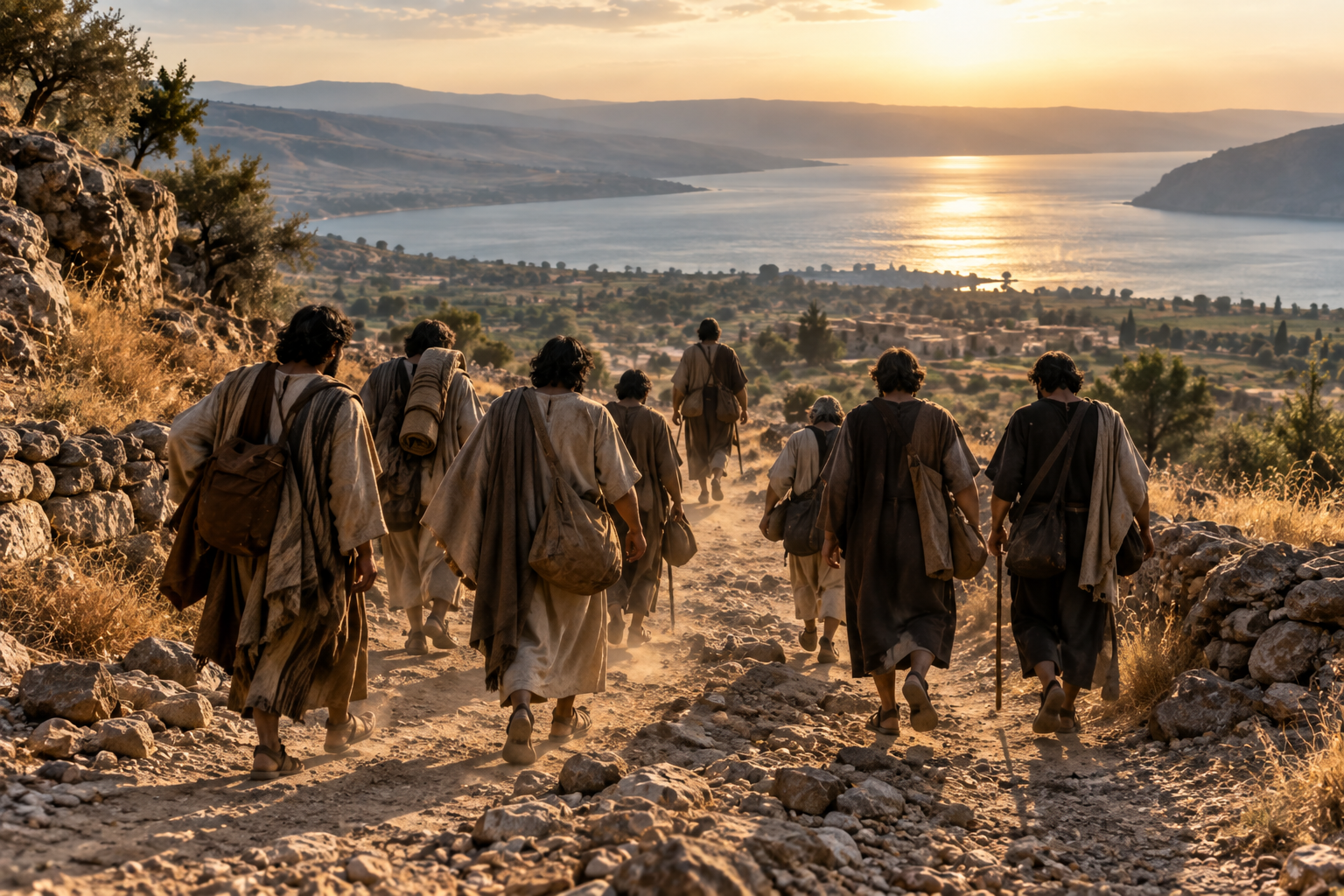
Sometimes the longest journey is the one that takes us back to ordinary life.
"I'm Going Fishing."
Maybe that's why Peter finally said,
"I'm going fishing."
I've often heard those words treated as though Peter was giving up.
I'm not so sure.
He wasn't walking away from Jesus.
He was walking toward something familiar.
Toward work.
Toward identity.
Toward the last place life had made sense.
There are seasons when life becomes so confusing that we instinctively return to what we know. We mow the grass. We clean the garage. We go back to work. We busy ourselves with familiar routines, hoping life will begin to make sense again.
Peter's words sound less like rebellion than exhaustion.
"I know how to fish."
"We're coming with you," the others answered almost immediately.
I couldn't help noticing who was in the boat.
Peter, who denied Jesus.
Thomas, who doubted.
Nathanael, who once wondered whether anything good could come from Nazareth.
James and John, the sons of thunder.
Then John does something curious.
He mentions two more disciples but leaves them unnamed.
I don't know why.
But every time I read the story, I find myself climbing into one of those empty places.
"He wasn't walking away from Jesus. He was walking toward the last place life had made sense."
Empty Nets
John tells us they fished all night and caught nothing.
All night they cast heavy nets into dark water and hauled them back empty.
Nothing.
Anyone who has worked hard knows that feeling.
Only then does John let us see the shoreline.
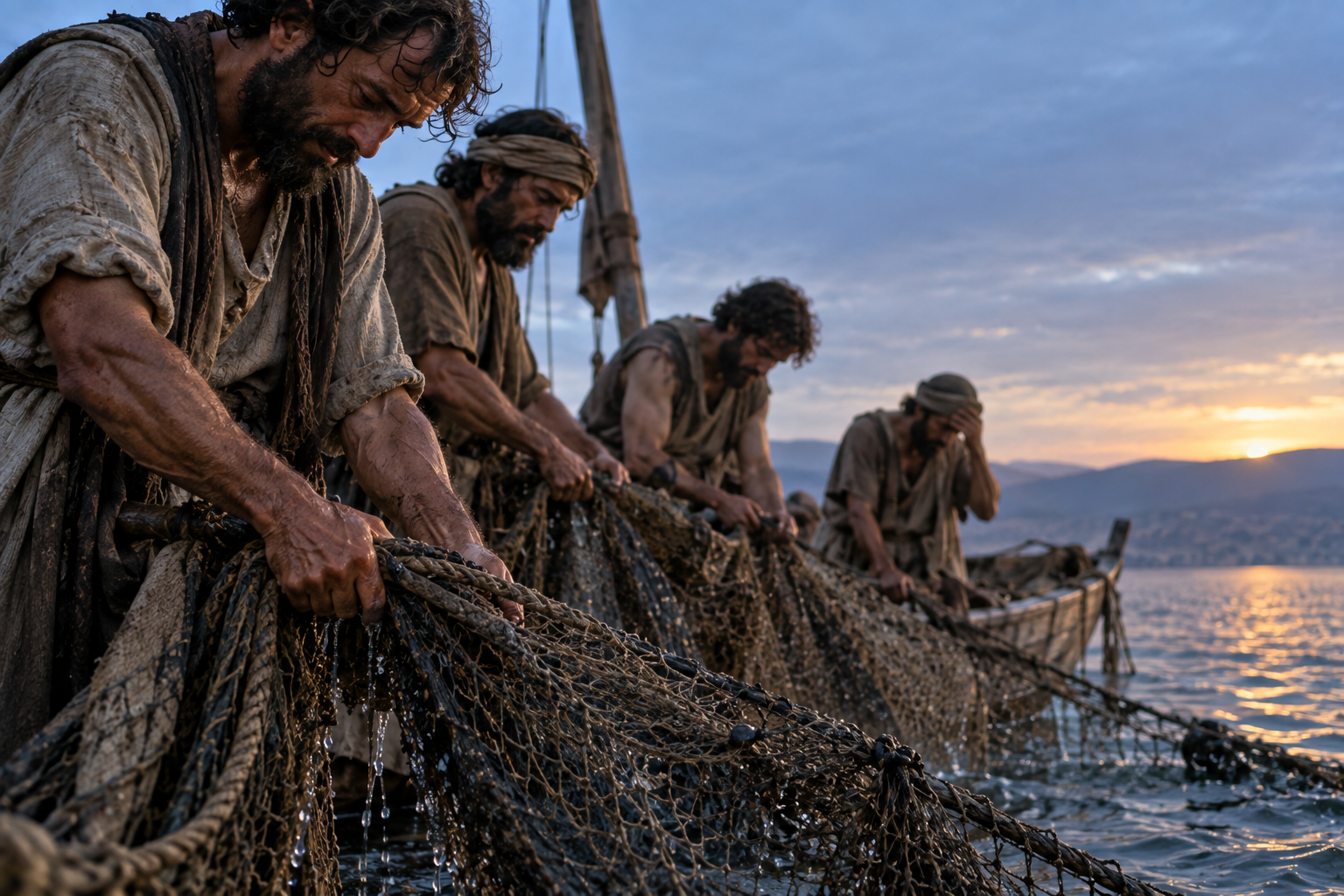
Sometimes the emptiest nets prepare us to recognize the One standing on the shore.
A Stranger on the Shore
Then comes one of the most beautiful sentences in the chapter.
"Just after daybreak, Jesus stood on the beach; yet the disciples did not know that it was Jesus."
John could simply have written,
"Jesus appeared."
Instead, he tells us where.
On a beach.
Not in the Temple.
Not in the upper room.
Not during worship.
Not while they were praying.
Jesus appears in the middle of ordinary life.
"Jesus appears in the middle of ordinary life."
Throughout this Gospel, John has been quietly preparing us for this moment.
Jesus told the Samaritan woman that true worship would no longer be tied to a mountain or a temple but would be "in spirit and truth."
I wonder if he was describing life itself.
Jerusalem represented the center of Israel's religious life.
Galilee represented everyday life.
Home.
Work.
Meals.
Neighbors.
Ordinary Tuesdays.
It is there—not in Jerusalem—that Jesus chooses to reveal himself one more time.
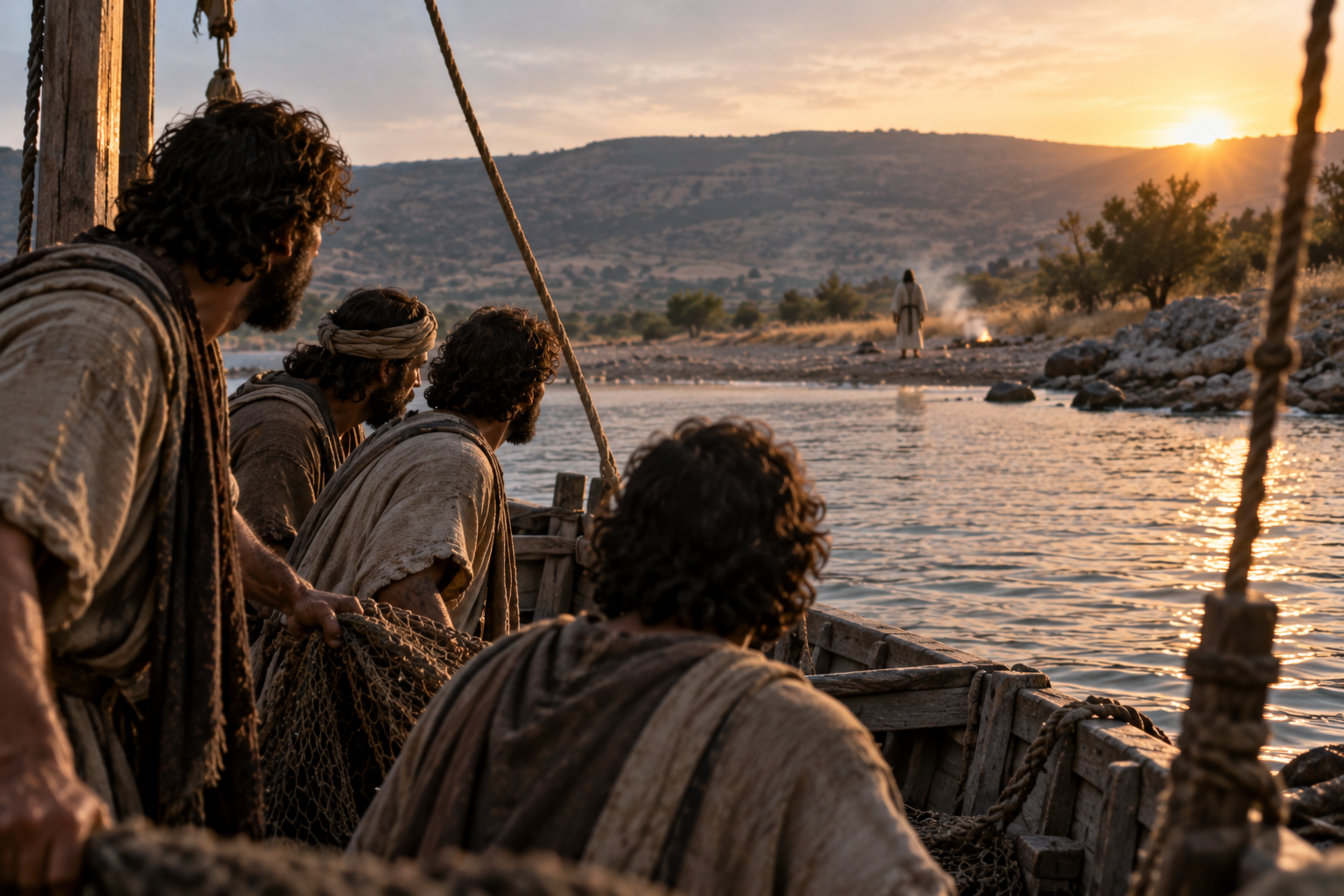
Jesus was already there. They simply did not recognize him.
Recognition
Notice something else.
The disciples do not summon Jesus.
Jesus comes to them.
John begins the chapter with these simple words:
"After these things Jesus manifested himself again..."
The initiative belongs entirely to Jesus.
He chooses the time.
He chooses the place.
Then he comes looking for them.
Isn't that the story John has been telling from the beginning?
We often imagine we are searching for God, only to discover that he has been moving toward us all along.
The disciples do not yet recognize him.
That may be the most important detail of all.
Jesus is already within their field of vision.
Reality has changed.
Their perception has not.
"Reality had changed. Their perception had not."
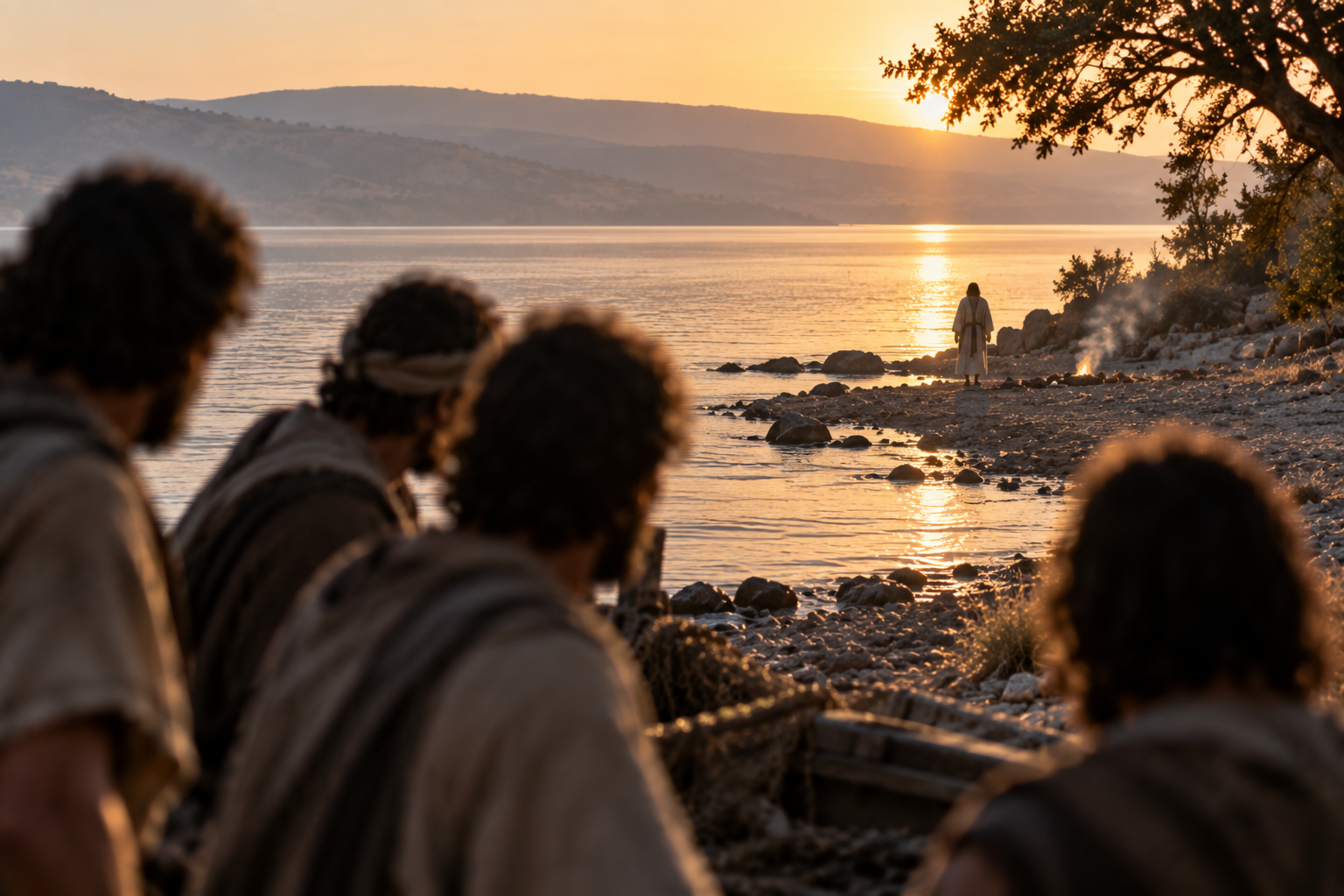
As I have worked through John's Gospel over these past several years, I have become less convinced that Jesus came to introduce a distant God and more convinced that he came to reveal the Father who had always been near.
Recognition—not creation—has become the recurring theme.
The risen Christ is already standing in the middle of ordinary life.
The question is whether the disciples—and whether I—have learned to recognize him there.

Resurrection on Tuesday Morning
John could have ended his Gospel in the excitement of the locked room, telling us what to believe.
Instead, he takes us back to work.
Back to the lake.
Back to disappointment.
Back to hunger.
Back to ordinary life.
The question is no longer simply whether resurrection happened.
John now asks a quieter—and perhaps more demanding—question.
What does resurrection look like when I go back to work?
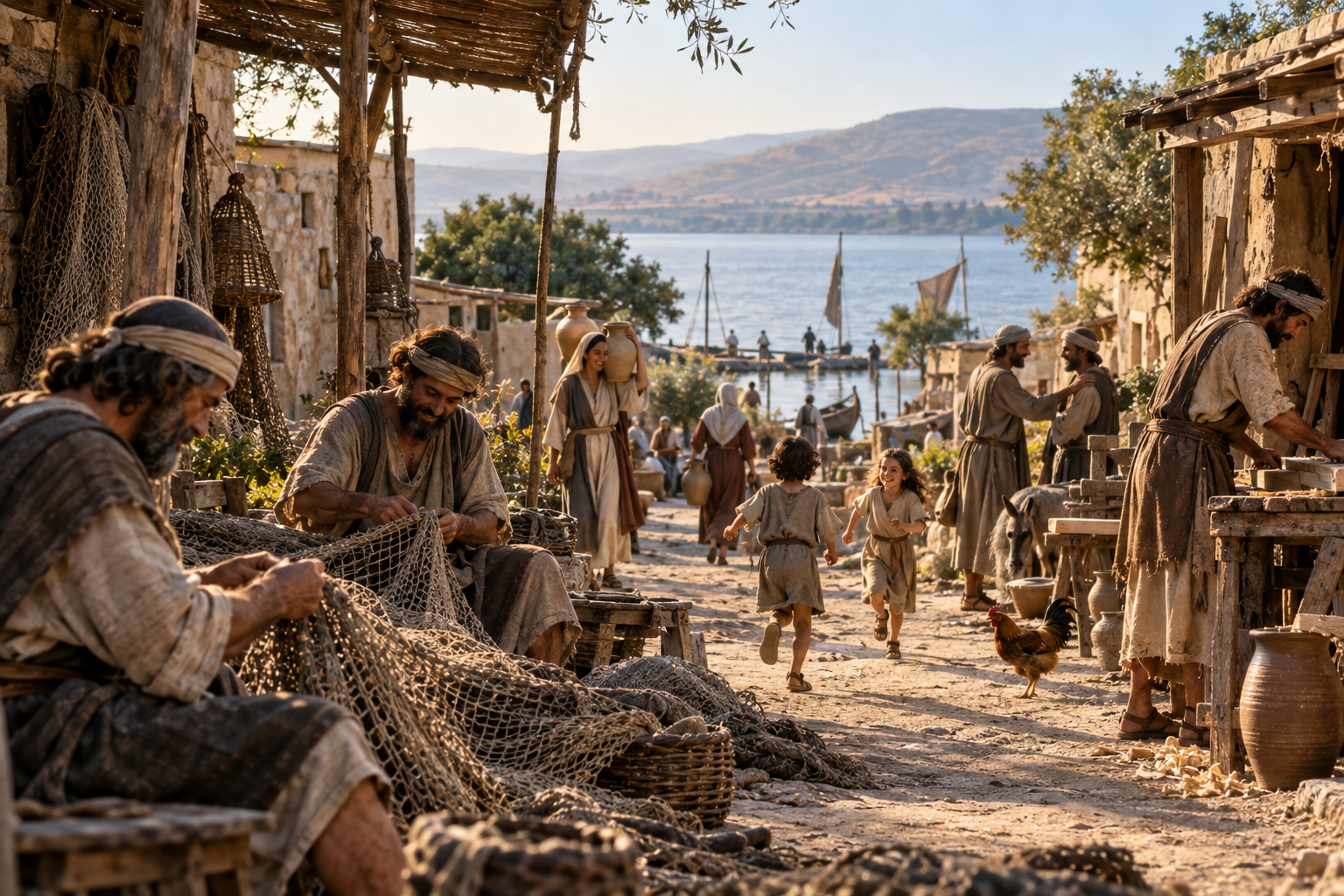
The answer begins with a stranger standing on a shoreline—a shoreline that looks remarkably like our own.
Reflection
Where is your Galilee?
What ordinary place has become so familiar that you've stopped expecting to encounter God there?
Perhaps John would quietly point toward your own Tuesday morning and remind you that resurrection was never meant to stay behind locked doors. It was always meant to reach the places where you live, work, love, struggle, and begin again.
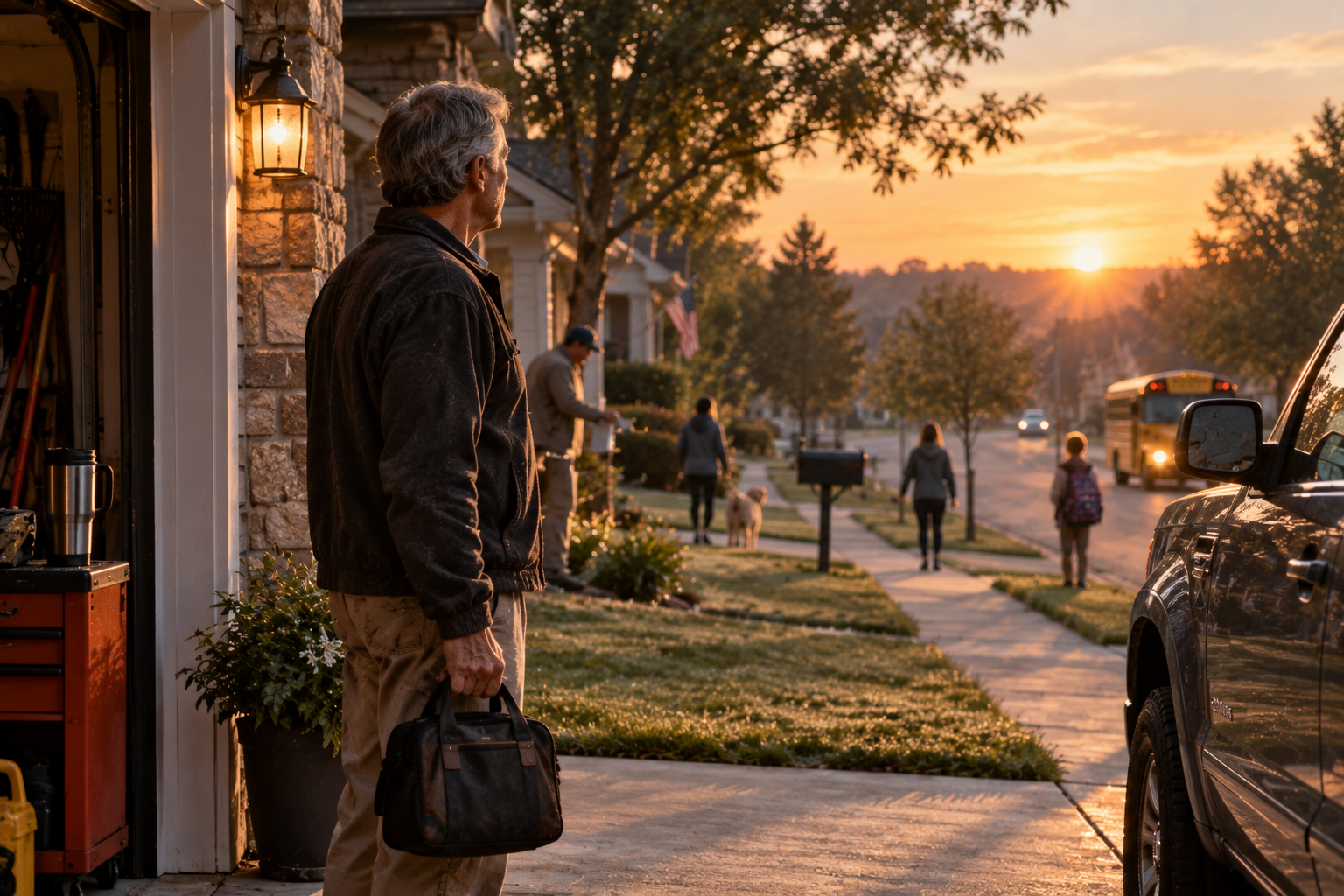
Resurrection doesn't take us out of ordinary life.
It teaches us to recognize the sacred already waiting there.
