
20.2 - When Love Steps Into the Absence
Based on John 20:11–18
As I sit with this story, I find myself wondering what Peter, John, and Mary expected to happen.
John never tells us. He simply tells us what happened. Yet they were human beings living through extraordinary events, and human beings always carry expectations into the future. At the arrest, they must have imagined some outcome. Perhaps they expected Jesus to reveal his power. Perhaps they expected God to intervene. Perhaps they expected the crowds to rally around him. Then came the cross, and surely that shattered whatever expectations remained. Then came the burial. Then came the tomb.
Whatever expectations they carried into those moments, one thing is certain.
The arrest did not unfold as expected.
The cross did not unfold as expected.
The tomb did not unfold as expected.
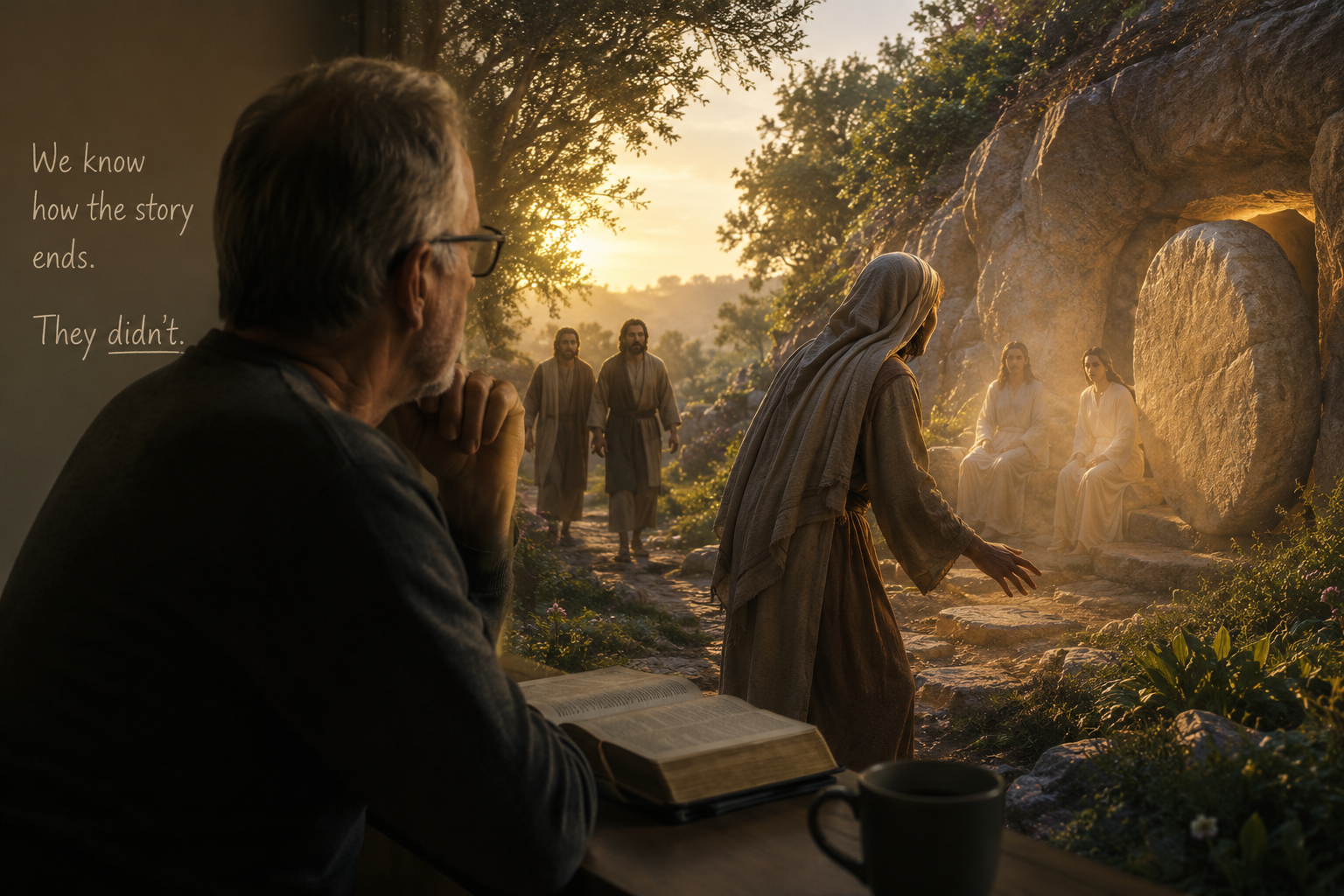
There is another challenge here. We approach this story carrying expectations of our own. For two thousand years, Christians have walked into this garden already knowing what comes next. We expect an empty tomb. We expect angels. We expect a risen Jesus. We expect resurrection.
Peter, John, and Mary expected none of those things.
That is what makes this scene difficult for you and me to walk into. We read it as people who know the ending. They lived it, in real time, as people whose understanding of reality was collapsing. The distance between those two perspectives is easy to underestimate.
To understand what happens next, I think we have to set aside, as best we can, what we know and stand beside them in what they did not know.
When I do that, the story feels very different.
Standing in the Absence
John tells us that Peter and the beloved disciple returned home (20:10). I understand that. Honestly, I probably would have done the same thing. They had seen the open tomb. They had seen the burial cloths. John says he “saw and believed” (20:8), though I am no longer convinced he means resurrection. I suspect he believed exactly what the evidence suggested at that moment. Jesus was gone. The body was not there. Whatever story they thought they were living had crumbled.
What captures my attention is not that Peter and John left.
It is that Mary stayed. I keep coming back to that detail.
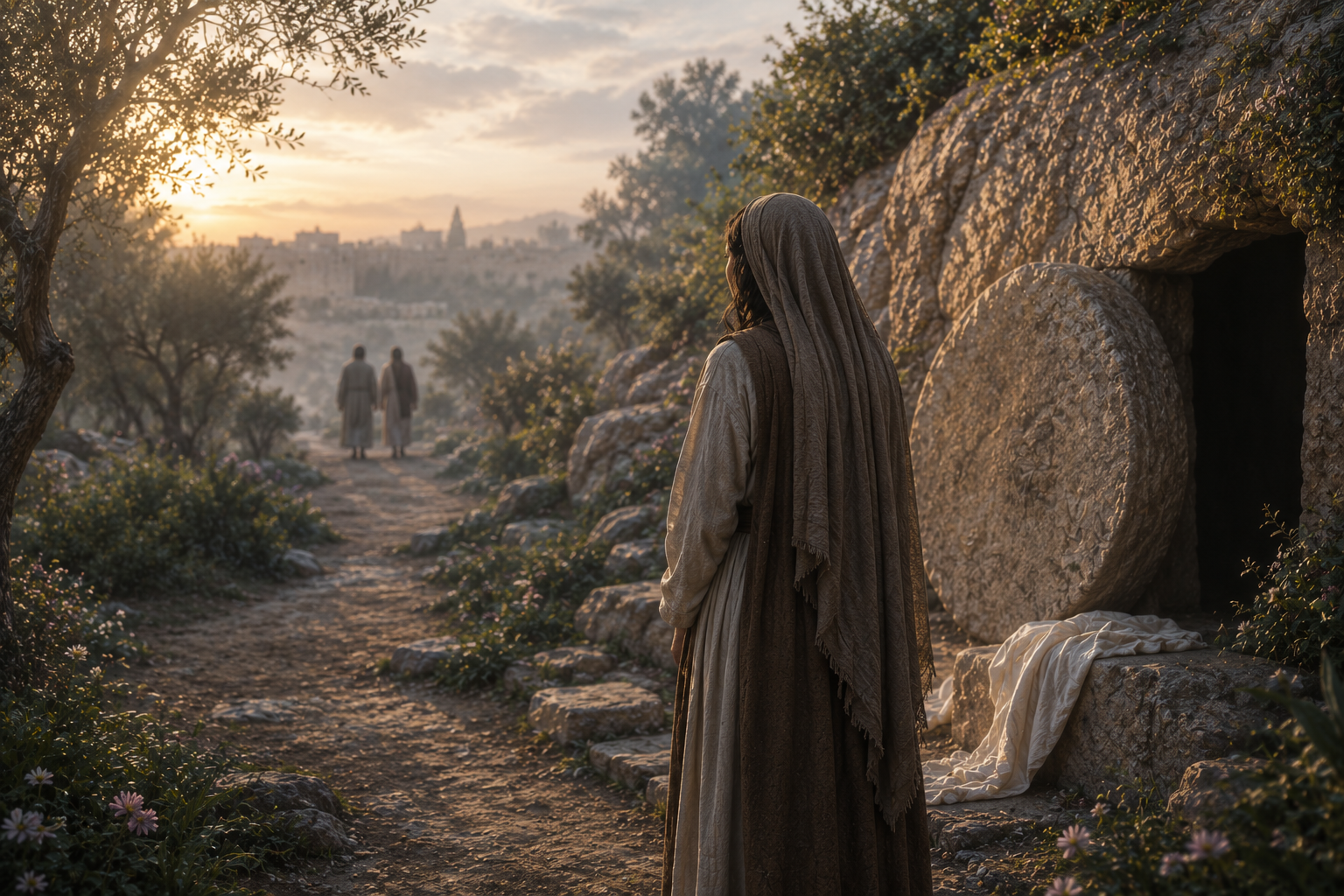
I can see her standing alone in the garden after the others disappear down the path. The morning is still young. The air is cool. Jerusalem is only beginning to wake. Everything she loved seems to have vanished, yet she does not leave. She remains near the tomb. She remains near the disturbance, holding nothing but questions.
That is harder than it sounds. I know. I have been there. Perhaps you have too.
Most of us do not like absence. We want to close the gap as quickly as possible. We distract ourselves. We rationalize. We search for explanations. We rush toward certainty. Anything feels better than standing inside a reality that no longer makes sense.
The more I think about it, the more I wonder if absence is not simply the loss of a person or a thing.
Perhaps absence is the space between the life we expected and the life that is.
It is the distance between the story we were carrying and the reality now standing in front of us. Sometimes that absence is created by death. Sometimes by disappointment. Sometimes by change we never asked for. Whatever its source, absence is what we experience when reality refuses to conform to our expectations.
If that is true, then Peter, John, and Mary were standing inside an enormous absence.
Mary does something most of us struggle to do.
She stays.
Looking Into the Darkness
John says she stooped down and looked into the tomb (20:11). That detail keeps drawing me back because the tomb would have been dark inside. A small rock-cut chamber. Shadows. Stone. Silence. To see anything, Mary would have had to bend down and look directly into the darkness.
I cannot get away from that image.
She is not looking toward certainty. She is not looking toward answers. She is looking directly into the place where death should still be. She is looking into the absence itself.
I wonder how many revelations are missed because we leave too soon.
How often do we retreat before the deeper understanding arrives? How often do we rush to fill the silence before it has finished speaking? How often do we distract ourselves from the very place where something new is waiting to emerge?
Mary seems willing to remain in the tension, willing to remain in the confusion, willing to remain in the absence long enough to discover what might emerge from it.
As she peers into the tomb, she sees two angels in white sitting where Jesus had lain, one at the head and one at the feet. The detail feels deliberate. They are seated precisely where death had been.
Then they ask her a question.
“Ma’am, why are you weeping?”
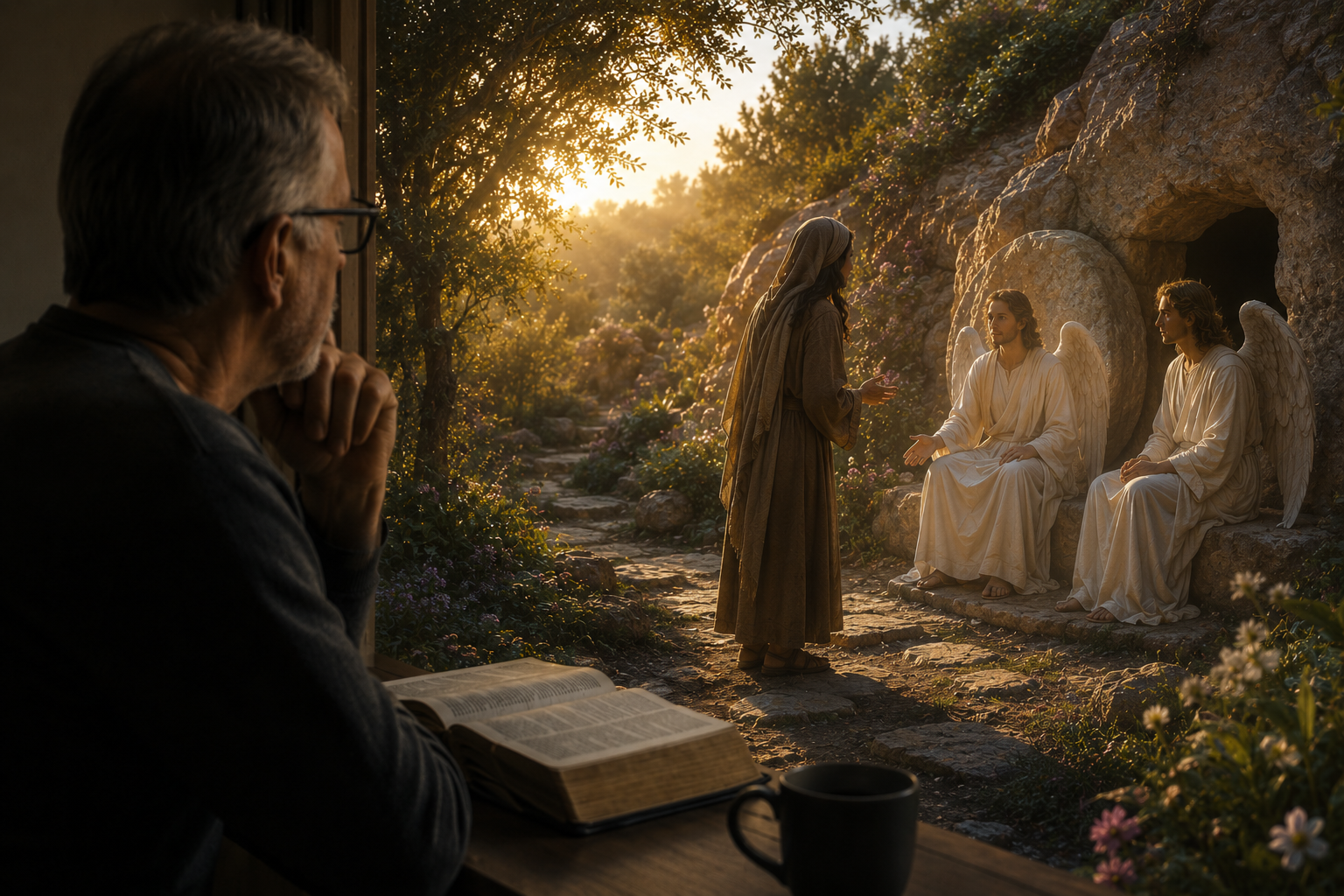
At first the question seems almost unnecessary. Why is she weeping? Everything she expected has fallen apart. Yet the longer I sit with it, the more I hear something else. The angels are not challenging her grief. They are gently challenging her interpretation of events.
It is almost as though they are saying, “Mary, the story you think you are standing in may not be the story you are actually standing in.”
That thought stays with me because revelation often begins there. Not when everything makes sense. Not when all the answers arrive. Revelation often begins when our old understanding fails. The framework collapses. The explanation no longer works. We find ourselves standing in an absence we cannot explain.
Perhaps absence creates a space where revelation can occur, if we will remain.
Mary still does not understand. Neither would I. Yet something is already unfolding inside the very place where she expected only death.
The Gardener
Then she turns and sees Jesus standing there, though she does not recognize him. That makes complete sense to me. Why would she expect resurrection? Why would any of us? Through tears and grief and the dim light of morning, she assumes he is the gardener.
If I had been standing there beside her, I would have made the same mistake.
Yet John leaves the misunderstanding in place long enough that I begin to wonder if he wants us to notice something about gardeners.
A gardener works with hidden things.
In my garden, seeds disappear beneath the soil long before anything visible appears. For a season the ground looks empty, barren, and silent. Yet beneath the surface life is already at work. Roots are growing. Change is happening. Something new is being formed long before I can see it.
Perhaps Mary is standing inside one of those moments. Everything appears empty. Everything appears lost. Yet new life is already present.
Mary
Then Jesus says her name.
“Mary.”
That is all.
No explanation. No argument. No lesson.
Just her name.
And suddenly she knows him.
When I imagine that moment, I do not see Mary standing still. I imagine her moving toward him immediately. Perhaps she grabbed his hands. Perhaps she embraced him. Perhaps she fell at his feet. Whatever form it took, it seems deeply human. The person she thought she had lost forever is suddenly standing in front of her.
Who among us would not reach for him?
Do Not Cling
Which makes Jesus’ response so fascinating.
“Do not cling to me.”
For years I heard distance in those words. Now I hear transition. Mary wants to hold onto the relationship she knew before. Jesus is telling her that the relationship has changed. Resurrection has changed it. Revelation has changed it. The old chapter has ended. A new one has begun.
That may be one of the hardest lessons in life. We often want revelation to restore what was. Instead, revelation creates something new. Once we truly see something we could not previously see, we cannot return to the old understanding. The old framework no longer fits. The old story no longer works.
I Have Seen
Then Jesus sends her.
Go tell the others.
Mary came to the tomb carrying grief. She leaves carrying witness.
“I have seen the Lord.”
Not, “I understand.”
Not, “I can explain it.”
Simply, “I have seen.”
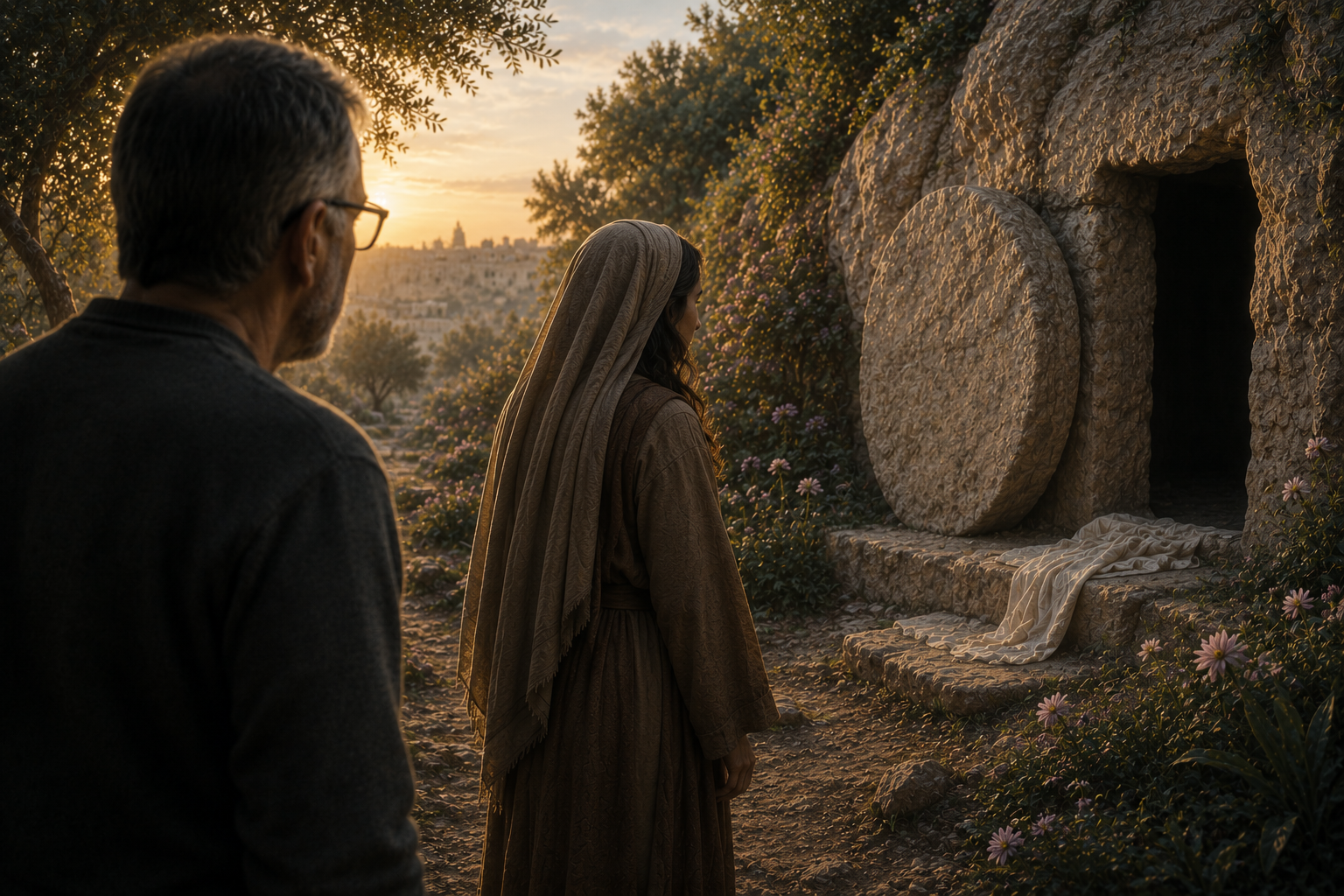
As I stand beside Mary, looking into that dark tomb and watching the scene unfold, I find myself wondering if John is inviting us to learn something from her willingness to remain. Peter and John leave, and no criticism is intended toward them. But Mary stays. She remains with the absence. She remains with the gap between the life she expected and the life she has been given. She remains long enough for revelation to arrive.
Staying Long Enough
The older I get, the more I wonder if that is one of the great invitations of the spiritual life. Instead of rushing toward distraction, certainty, or explanation, perhaps we are called to remain present to the absence itself. To sit with it. To look into it. To allow it to do its work. Not forever, but long enough for a deeper reality to emerge.
Absence creates a space where revelation can occur.
Revelation creates a space where something new can be born.
Mary arrived expecting a body. Instead, she encountered a new reality. From that revelation came a new relationship, a new mission, and eventually a new community that would change the world.
Perhaps that is why she stayed.
And perhaps that is why John wants us to stay there too.
This is the glimpse I’ve been given, through John’s words and my own walk through loss and light.
